

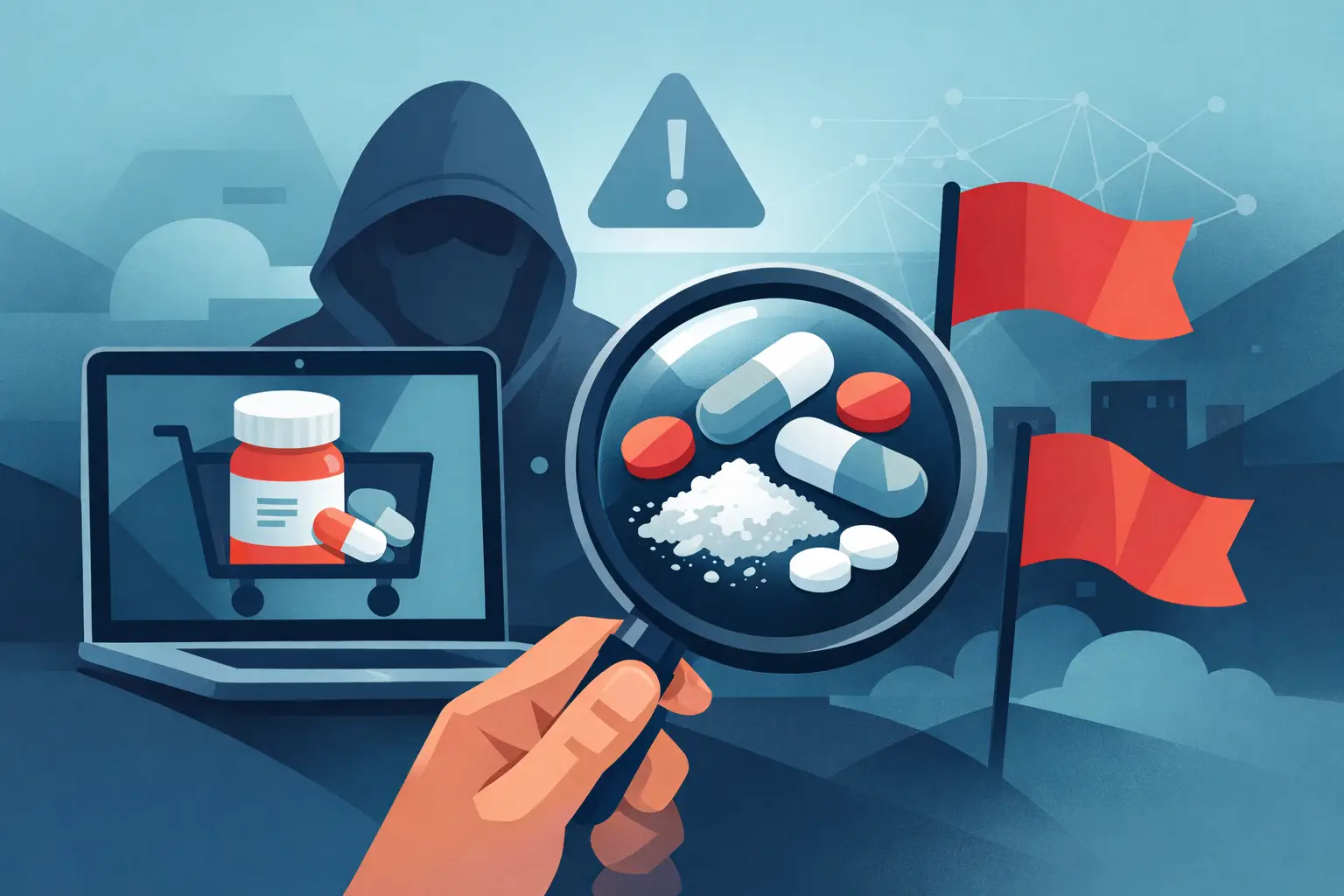
The pitch for synthetic opioids online is always the same – fast access, broad selection, discreet shipping, and claims of lab-grade quality. What usually gets buried is the part that matters most: this market carries extreme legal, safety, and fraud risk, and the gap between marketing language and reality can be massive. If you are researching this category, you need a clear view of how the online market actually works and where the biggest red flags show up.
Why synthetic opioids online attract scrutiny
Synthetic opioids sit in one of the highest-risk segments of the chemical marketplace. That is true because potency can vary dramatically, legal status changes fast, and many compounds in this class are linked to severe overdose risk even at very small amounts. A storefront can look polished and still tell you almost nothing useful about chain of custody, verified identity, contamination risk, or whether the material shipped matches the label.
That is the first trade-off buyers often miss. Convenience is real. So is uncertainty. The more a seller leans on frictionless ordering language, overnight delivery claims, or broad promises without substance-specific documentation, the more carefully you should read the offer.
This is also why payment processors, carriers, regulators, and marketplaces watch this category closely. A product page can frame a compound as research-oriented or lab-use-only, but that label does not erase legal exposure or reduce the real-world dangers tied to highly potent opioid analogs.
What the market gets wrong
A lot of websites selling synthetic opioids online borrow the language of scientific supply while operating like direct-to-consumer stores. You will see phrases like certified standards, quality assurance, premium compounds, and secure delivery placed next to impulse-driven purchase language. That combination is not proof of credibility. It is marketing.
A real quality conversation would go further. It would address lot consistency, analytical methods, storage conditions, packaging integrity, and how the seller handles discrepancies. It would not rely mostly on speed, convenience, and constant stock claims.
This matters because synthetic opioids are not a category where vague assurances are good enough. In lower-risk product classes, sloppy language may be a credibility issue. Here, it can become a life-and-death issue.
The biggest red flags in synthetic opioids online listings
One red flag is broad inventory without depth. If a seller claims to stock everything across opioids, benzos, stimulants, psychedelics, dissociatives, and more, but offers almost no meaningful detail for each item, that usually tells you the storefront is optimized for conversion first and verification second.
Another warning sign is generic testing language. If a site says every product is purity checked or lab tested but never explains what testing was performed, by whom, on which lot, and with what documentation, the claim is too thin to carry much weight.
You should also be cautious with exaggerated shipping promises. Fast fulfillment can be a sign of strong operations, but in a high-risk category it is often used as emotional reassurance. Speed does not verify authenticity. Secure delivery claims do not eliminate seizure risk, substitution risk, or legal consequences.
Then there is pricing. If a listing looks dramatically cheaper than the rest of the market, it is rarely because the seller has cracked some efficiency code. It may point to mislabeling, dilution, scams, or low repeatability between orders. In a category defined by potency and narrow margins for error, price-led decision making is a dangerous shortcut.
Quality claims versus actual quality control
The phrase quality assured sounds strong. On its own, it means very little. For synthetic opioids online, quality control should be specific, repeatable, and tied to identifiable batches. Without that, buyers are relying on storefront confidence rather than evidence.
Even when a seller provides some form of documentation, there are still trade-offs. A certificate can be outdated, incomplete, tied to a different lot, or presented in a way that sounds official without answering the central question: does this exact batch match the claimed identity and purity profile?
The hardest truth in this space is simple. The average buyer has less visibility than the seller and often less leverage after payment clears. That imbalance is why this market attracts both opportunistic vendors and sophisticated fraud.
Legal exposure is not a footnote
Many buyers treat legality as a detail to sort out later. That is a mistake. The legal status of synthetic opioid compounds can change quickly, and substances may be controlled directly, treated as analogs, or trigger state and federal enforcement concerns even when a website frames them as niche research materials.
The wording on a storefront does not protect the buyer. Terms like not for human consumption, research use only, or no prescription needed do not cancel out the actual legal framework. If anything, aggressive convenience language can signal a seller that prioritizes volume over buyer protection.
The practical issue is not just whether a compound appears on one list. It is whether possession, importation, resale, payment trails, shipping records, and communications create risk. In this category, they often do.
How to evaluate a vendor without fooling yourself
If you are assessing a seller in this space, the first question is not how polished the site looks. It is whether the operation provides substance-specific information that would hold up under scrutiny. Generic claims, copied descriptions, and category-level promises are weak signals.
Look for consistency across the whole storefront. Does the business present the same standards for every high-risk class, or does it rely on the same recycled language everywhere? Does it explain how issues are handled, or only promise support and fast resolution? A serious supplier should be able to answer detailed questions clearly. Evasion is a signal.
It also helps to separate business competence from product integrity. A vendor may be responsive, ship quickly, and package discreetly while still failing at identity verification or batch consistency. Strong customer service cannot compensate for poor control of dangerous compounds.
If a site like Tunaseafoodchem positions itself around broad catalog coverage, secure shipping, and premium inventory, that may appeal to convenience-focused buyers. But those claims only matter if they are backed by evidence that is specific to the actual compound and batch in question. Category breadth is not a safety standard.
Why buyers keep getting pulled in anyway
The appeal is easy to understand. Online sourcing reduces friction. It offers access to compounds that may be hard to find elsewhere. It gives buyers a sense of control, especially when the storefront is simple, responsive, and built like mainstream e-commerce.
That is exactly why caution has to be stronger here than in ordinary online purchasing. This is not like comparing everyday products with minor quality differences. In the synthetic opioid segment, small errors can carry huge consequences. A mislabeled item, a contaminated batch, or a potency mismatch can change the entire risk profile.
There is also a psychological trap. Repetition creates trust. When a storefront repeatedly says quality assured, express shipping, secure ordering, and premium products, the language starts to feel credible through familiarity alone. That feeling is not verification.
A more realistic way to think about synthetic opioids online
The smartest way to approach this topic is to treat every convenience claim as secondary. Speed, inventory breadth, and easy ordering are never the core issue. The core issue is whether the product is what it claims to be, whether the transaction creates legal risk, and whether the seller can support its claims with more than sales copy.
In this segment, uncertainty is not an edge case. It is built into the market. That does not mean every vendor is fraudulent or every listing is false. It means the burden of skepticism should be much higher than buyers usually want it to be.
If your main priority is fast access, you are already vulnerable to exactly the kind of messaging this market uses best. If your main priority is risk reduction, the marketing starts to look very different. Claims that once felt persuasive start to look incomplete.
The closing thought is simple: when a market sells confidence first and verification second, the real product is often reassurance. In a category this dangerous, reassurance is the one thing you cannot afford to buy on faith.